The First Look Says It All
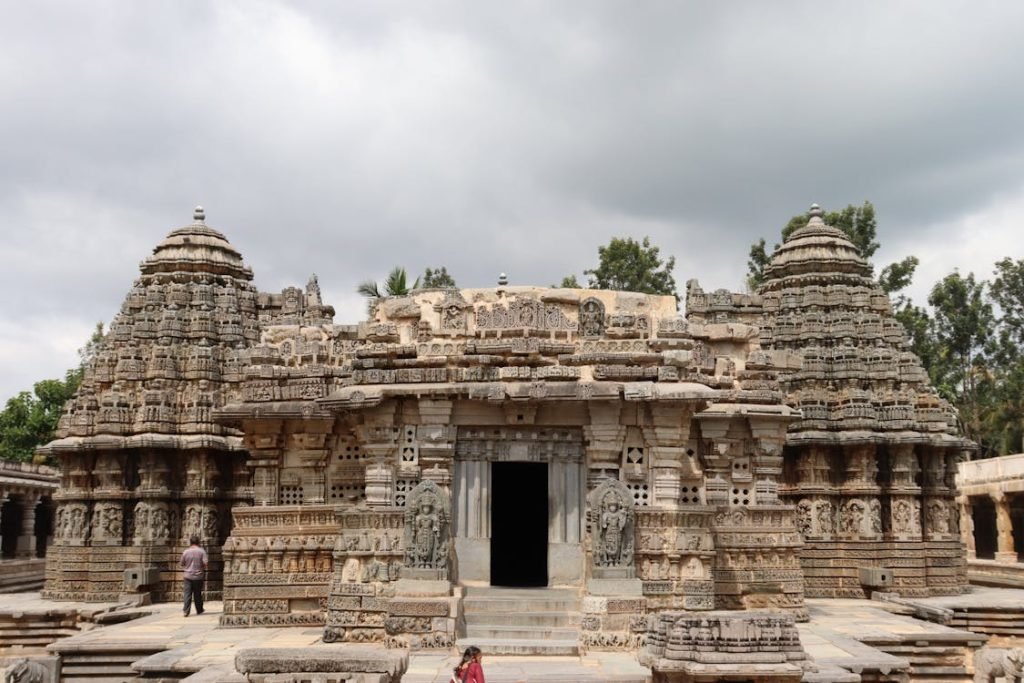
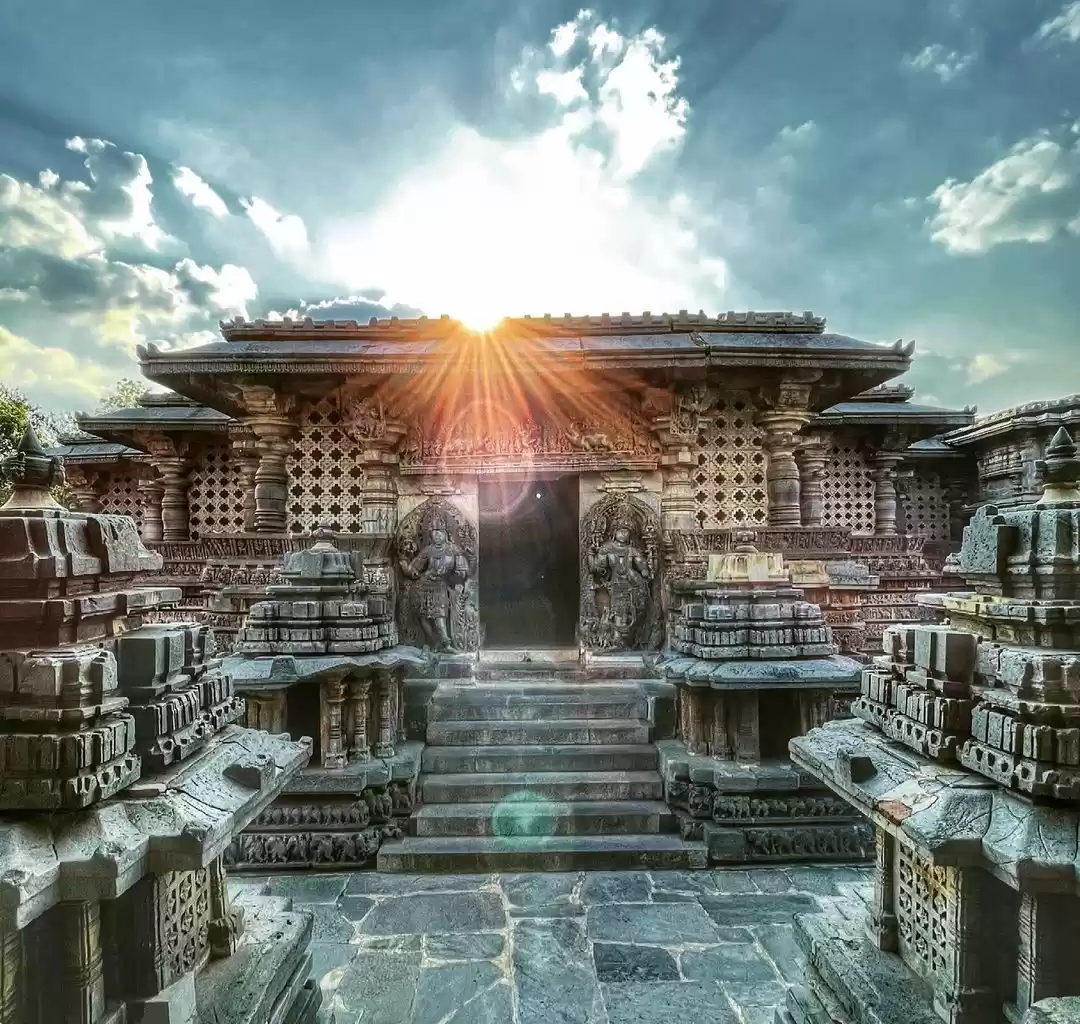
The stone is the first thing you come across at Hoysaleswara Temple. Then you look again. And suddenly, the walls even seem alive. Everywhere there are gods, animals, dancers, warriors, flowers, and dots. The surface rarely tells the story. Which is why this temple is unique. It doesn’t give everything away upfront.
A Temple That Makes You Slow Down
Some monuments can be understood in a few minutes. Hoysaleswara Temple is not one of them. Walk around its walls, and you will keep discovering new details. Perhaps the biggest warrior of them all, and some tiny animals blended into the patterns. It sort of seems like the people who built it may have just left behind a huge stone puzzle.
Halebidu Has a Story Too
Temple in Halebidu, Hassan district, Karnataka. This place was earlier a significant center of the Hoysala Empire. Today, it feels much quieter. The temple does give you a taste of the city in its heyday. It serves to remind us that in this peaceful location there lived artists, rulers, builders, worshippers, and bustling streets.
Built for Lord Shiva
It is believed to be affiliated with Lord Shiva and so bears the name ‘Hoysaleswara Temple’. Contains two temples, and it is married to Hoysaleswara and Shantaleswara. The existence of a twin-shrine temple is unusual in itself. If you turn towards the outer walls, however, you are sure to get the real thrill.
Look at the Walls, Not Just the Temple
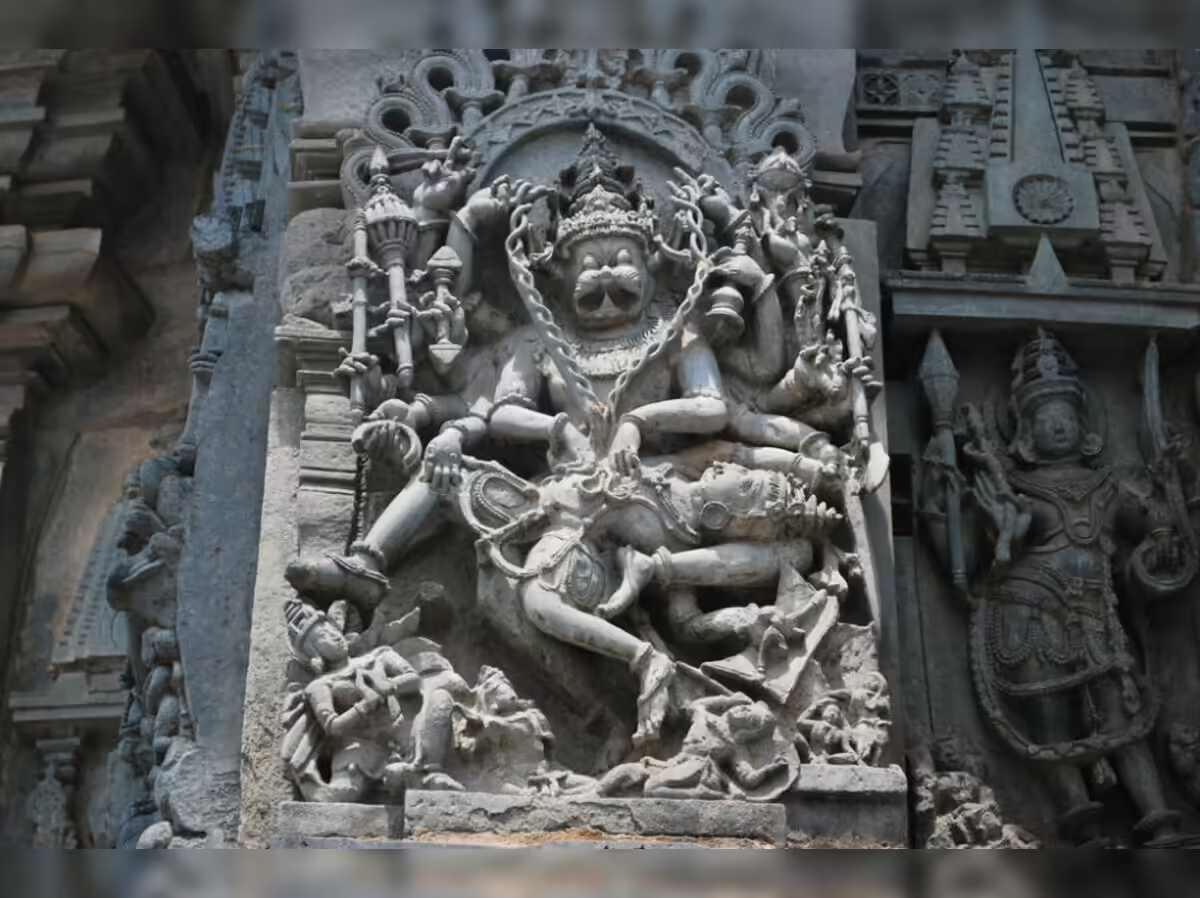
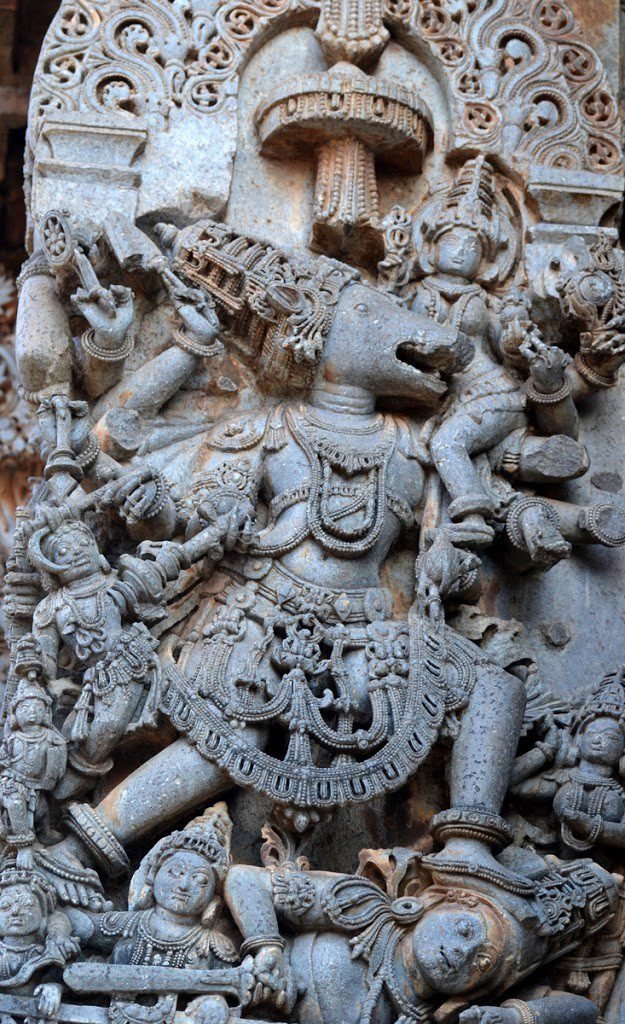
The walls are adorned with sculptures. Animals, singers, dancers, and scenes from folk stories can be found within these displays representing Hindu rites. The two worlds shown depict mythological events within The Ramayana and The Mahabharata. One may perceive it to be like walking through an unfinished book.
Why Do the Walls Look Like This?
One part of the answer lies in Hoysala architecture. The temple thus stands out due to its star-shaped outline. Its various projections and curves form shifting patterns of light and shade. Take a few steps away, and the same wall can appear quite different. That is clever design.
Stone That Could Hold Tiny Details
The creators primarily used a variety of stone called soapstone, or chloritic schist. This was a good material to carve fine detail into. And the artificers made heavy use of that. Attention was paid to jewelry, clothing, hair and facial expressions, animals, as well as decorative patterns. Some details are so small they need to be seen up close.
Imagine Making This by Hand
There is no easier way to value the temple, perhaps. Forget modern machines for a minute. You have a rock, you have simple tools, you have a design in your head, and you have years of training. Now try chiseling little stones. Then imagine doing it again. And again. Which begs a more personal thought about that temple.
The People Behind the Stone
Ancient temples are easy to talk about as though they built themselves. They did not. Real people designed them. Real craftsmen shaped the stone. Their hands became tired. Mistakes had to be corrected. Solving some of the harder pieces. While UNESCO tells us that some Hoysala temples have artists’ signatures, it gives a unique opportunity to name the craftsmen of this tradition. That small fact informs the way that you look at the sculptures.
Look for Nandi
Nandi sculptures at this temple are also excellent. Nandi is a bull and has a strong connection to Lord Shiva and is usually depicted in the direction of the shrine. Hoysaleswara Temple, the sculpture, again is an opportunity to admire the artisans who chiselled a fine work. Look at the body. Look at the ornaments. Stay. Work. Then consider the Little Things. This is why visitors take their time studying the stonework.
Not Everything Survived
The temple you see today is not the same as it was centuries ago. Some of the original structure has been lost. According to UNESCO, the superstructure of the Hoysaleswara Temple and enclosure walls are no longer standing. However, the rest is literally superhuman. That kind of makes the sculptures that did survive even more precious in a way.
A UNESCO World Heritage Treasure
Hoysaleswara Temple is included in the Sacred Ensembles of the Hoysala in the World Heritage list of UNESCO in 2023 along with Somnathpur within the World Heritage property. Hoysaleswara Temple. The fact is that the acceptance of Hoysala temples as a UNESCO World Heritage site is an honor to Karnataka as well as the world heritage status for India.
What Can We Learn From It?
The shrine is much more than a lesson in architecture. It teaches patience. It teaches attention to detail. Above all, it proves a lesson in what is possible when skill meets imagination. A lesson that makes sense still today.
Take Your Time Here
Never hurry if you visit Hoysaleswara Temple. Pick one sculpture. Look at it carefully. Then move to another. You can see an object that you saw a few minutes back, maybe. And that is the magic of this place.
Every Stone Has a Human Touch
The Hoysaleswara Temple is not just an age-old monument. It is a chronicle of mankind’s artistic ritual made manifest in stone. The viewers of these works, the people who made these works hundreds of years ago, had to make choices that are still reflected today. In most cases,s their names still are not remembered. Their work is not.
Cessation
Hoysaleswara Temple does not have to cry out loud to convince you. Its details do the talking. Every artifact, design, beast, and tale is one more building block of the whole. It is a reminder that history does not exist only in books or museums. At times, it silently stands right in front of you. And sometimes,th all you have to do is just stop and look.
Also Read: Chennakeshava Temple, Belur: Where Every Stone Has a Story